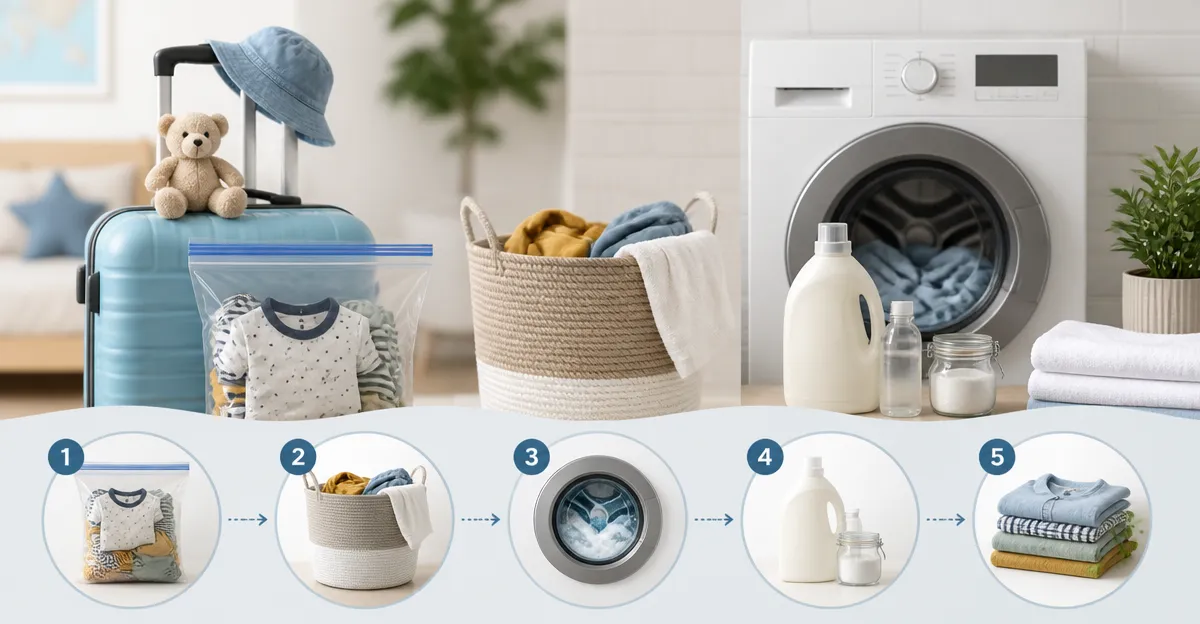
Introduction
This guide explains how parents can quarantine post‑travel laundry for children who suffer from eczema, ensuring that every garment is cleaned in a skin‑safe manner. The reader will learn how to sort, pre‑treat, wash, dry and store clothing while minimizing exposure to irritants that commonly trigger flare‑ups. By following the recommended routine, families can reduce the risk of allergic reactions, maintain the integrity of delicate fabrics, and create a hygienic environment for sensitive skin. The information presented is based on clinical best practices and real‑world product performance.
What You’ll Need
- Lifewit 80L Laundry Baskets – large capacity, reinforced handles, collapsible design.
- HomeHacks 75L Laundry Baskets – freestanding structure, double reinforced handles.
- Handy Laundry Pop‑Up Hamper – mesh construction, side pocket, space‑saving.
- DOKEHOM 90L Collapsible Laundry Hamper – soft‑grip handle, waterproof coating.
- efluky Slim 48L Laundry Hamper – narrow profile, drawstring cover.
- Hypoallergenic, fragrance‑free detergent (e.g., free‑and‑clear).
- White vinegar, baking soda, and a soft brush for pre‑treatment.
- Rubber gloves, clean towels, and a dedicated drying rack.
Step 1: Isolate and Transport Laundry
Immediately after returning from travel, place all garments into a dedicated container to prevent cross‑contamination with other household items. The Lifewit 80L Laundry Baskets are ideal for this purpose because their 80‑liter capacity can hold multiple loads, and the reinforced handles allow one adult to carry the basket up stairs without strain. The basket’s waterproof polyester interior protects moisture‑laden fabrics from leaking onto floors, and the collapsible design permits storage when the quarantine period ends.
For households with limited floor space, the efluky Slim 48L Laundry Hamper provides a narrow alternative that fits between a washer and dryer. Its drawstring mesh cover keeps dust out while allowing airflow, which reduces the growth of mold that could aggravate eczema. Both baskets should be placed in a well‑ventilated area away from pets and food preparation zones.
Step 2: Sort by Fabric Type and Irritant Potential
Separate clothing into three categories: (1) cotton and natural fibers, (2) synthetics, and (3) items with embellishments such as Velcro or glitter. Cotton garments are less likely to trap irritants, while synthetics may retain residues from travel‑related environments. Use the HomeHacks 75L Laundry Baskets for the synthetic pile because their sturdy metal frame maintains an upright position even when the basket is empty, reducing the chance of items toppling over during sorting.
Place each sorted pile into its own basket to avoid mixing fabrics that require different washing temperatures. This practice also simplifies the later stage of selecting appropriate machine cycles, thereby protecting the child’s skin from temperature‑related irritation.
Step 3: Pre‑Treat Potential Irritants
Travel can expose clothing to pollen, dust mites, and chemical residues from public transportation. Create a pre‑treatment solution of one cup white vinegar and one tablespoon baking soda. Apply the mixture to the interior of the basket using a soft brush, focusing on seams and cuffs where allergens tend to accumulate. The vinegar neutralises alkaline residues, while baking soda lifts particulate matter without harsh chemicals.
For stubborn stains, gently rub the affected area with a damp cloth soaked in the solution. Allow the garment to sit for five minutes before proceeding to the wash cycle. This step is critical because it removes hidden triggers that could otherwise remain embedded in fibers.
Step 4: Select a Skin‑Safe Detergent
Choose a fragrance‑free, dye‑free detergent that is specifically formulated for sensitive skin. While the guide does not promote a particular brand, the selected detergent should be free of optical brighteners and enzymes that are known to irritate eczema‑prone skin. Measure the detergent according to the manufacturer’s instructions; excessive suds can leave residue that clogs pores.
Adding half a cup of white vinegar to the rinse cycle further softens fabrics and eliminates any remaining detergent residue. This dual‑action approach ensures that garments emerge from the wash cycle as gentle as possible for a child’s delicate epidermis.
Step 5: Configure Washing Machine Settings
Set the machine to a warm water temperature of 30°C (86°F). Warm water effectively dissolves detergent while preserving the integrity of natural fibers. Select a gentle or delicate cycle to minimise mechanical agitation, which can cause micro‑tears in fabric and expose skin to rough edges.
Activate an extra rinse option if available. The additional rinse flushes out residual irritants, providing an extra layer of protection for eczema‑sensitive children. Avoid using fabric softeners, as they often contain fragrances and chemicals that can exacerbate skin conditions.
Step 6: Dry and Store Safely
After washing, transfer clean garments to a dedicated drying rack placed in a well‑ventilated area. For families with limited space, the DOKEHOM 90L Collapsible Laundry Hamper serves as an excellent interim storage solution. Its 90‑liter capacity accommodates multiple loads, and the soft EVA grip handle allows easy transport to the drying area without straining the caregiver’s hands.
Do not tumble‑dry items that are labeled as air‑dry only, as high heat can increase skin irritation. Instead, allow clothing to air‑dry completely before folding. Once dry, fold garments inside the Handy Laundry Pop‑Up Hamper, using the side pocket to store dryer sheets or hypoallergenic scent‑free sachets. The mesh construction promotes airflow, preventing mildew growth that could trigger eczema flare‑ups.
Step 7: Clean the Washing Machine After Use
Run an empty hot‑water cycle with two cups of white vinegar and a quarter cup of baking soda to cleanse the drum. This routine removes any lingering allergens and detergent buildup that could be transferred to subsequent loads. Wipe the door seal and detergent drawer with a damp cloth after the cycle completes.
Regular maintenance of the washing machine is essential for families managing eczema, as it ensures that each new load begins with a clean environment.
Tips & Pro Tips
- Label each basket with the fabric category to streamline future sorting.
- Wear rubber gloves when handling pre‑treatment solutions to protect your own skin.
- Store the efluky Slim 48L Laundry Hamper in a closet corner to keep it out of children’s reach while maintaining accessibility for adults.
- Rotate the use of baskets to evenly distribute wear and extend product lifespan.
- Keep a small bottle of hypoallergenic moisturizer near the laundry area; applying it to the child’s skin after dressing can reinforce the skin barrier.
Troubleshooting
Problem: Garments retain a faint odor after washing.
Solution: Add an extra half‑cup of white vinegar to the rinse cycle and increase the spin speed slightly to extract more water, allowing faster drying.
Problem: Baskets become unstable when fully loaded.
Solution: Distribute weight evenly and avoid placing heavy items on the basket’s edges. The reinforced handles of the HomeHacks 75L Laundry Baskets provide additional support for balanced loads.
Conclusion
By isolating, sorting, pre‑treating, washing, drying and storing laundry with the steps outlined above, parents can create a quarantine system that protects children with eczema from common irritants. The recommended products enhance each stage of the process, offering durability, capacity and convenience without compromising skin safety. Implementing this routine after every trip will minimise flare‑ups, preserve the health of the child’s skin, and provide peace of mind for the entire family.
Products Mentioned in This Guide
Frequently Asked Questions
Why should I quarantine post‑travel laundry for a child with eczema?
Travel clothes can carry pollen, dust mites, and chemicals that trigger eczema flare‑ups, so quarantining reduces skin exposure to these irritants.
How do I sort clothing before starting the quarantine process?
Separate garments by fabric type and level of contamination, placing heavily soiled items in a dedicated basket for pre‑treatment.
What pre‑treatment steps help remove irritants from travel clothes?
Apply a hypoallergenic stain remover or a gentle enzyme wash to the interior seams and cuffs, then let it sit for 5‑10 minutes before washing.
Which washing settings are safest for eczema‑prone fabrics?
Use a cold‑water, gentle cycle with a fragrance‑free, dye‑free detergent and an extra rinse to fully clear residues.
How should I store the cleaned laundry to keep it skin‑safe?
Place fully dried items in a clean, breathable basket or sealed bag away from pets and chemicals until they are needed.