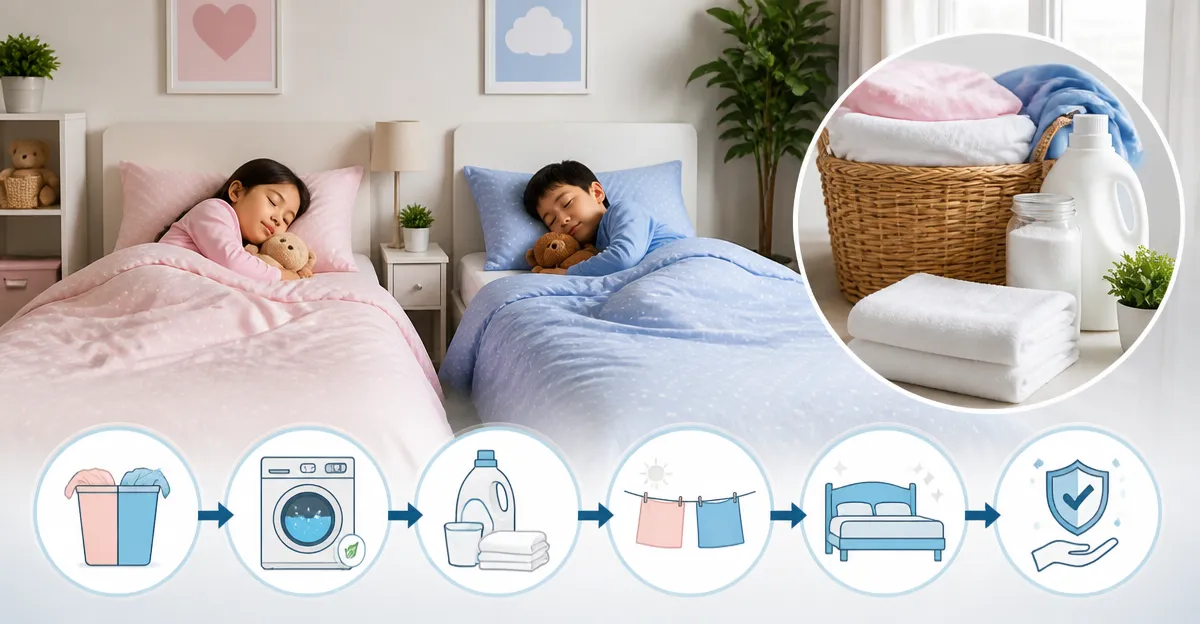
Introduction
Parents who share a bedroom with children who suffer from eczema understand that bedding can become a hidden source of irritation. This guide explains how to create a clean, hypoallergenic sleeping environment that reduces cross‑contamination between siblings. Readers will learn practical laundry routines, protective bedding selections, and maintenance habits that safeguard delicate skin while preserving comfort.
By following the step‑by‑step instructions, caregivers can minimise exposure to dust mites, pollen, pet dander, and moisture that commonly trigger eczema flare‑ups. The information is based on clinical best practices and real‑world product performance, ensuring that each recommendation is both effective and affordable.
The guide also highlights specific tools that simplify the process, such as allergen‑blocking pillow protectors and waterproof mattress encasements. Even families who choose not to purchase these items will benefit from the underlying principles of hygiene and barrier protection.
Overall, the objective is to empower families to maintain healthy sleep spaces, improve skin condition, and extend the lifespan of mattresses and pillows.
What You'll Need
- AllerEase Zipper Pillow Protectors – 4‑pack, $25.50, 4.8/5 rating
- Amazon Basics Mattress Topper – Twin, $17.40, 4.6/5 rating
- Hospitology Mattress Encasement – Queen, $44.00, 4.6/5 rating
- Mueller Queen Bed Sheets – 6‑piece set, $23.99, 4.5/5 rating
- AllerEase Mattress Protector – Queen, $45.74, 4.5/5 rating
- Gentle, fragrance‑free detergent (e.g., hypoallergenic liquid)
- White vinegar (for odor control)
- Soft brush for pre‑treating stains
Step 1: Separate Bedding by Child
Begin by assigning a dedicated set of pillowcases, sheets, and blankets to each sibling. This prevents direct transfer of allergens and skin flakes during laundering. Label each set with a name tag or colour‑coded clip to avoid accidental mixing.
When selecting pillowcases, consider the AllerEase Zipper Pillow Protectors. The tightly woven polyester‑nylon blend creates a barrier that blocks 99.9% of dust mites while allowing breathability. The temperature‑balancing technology keeps the pillow surface cool, which is beneficial for eczema‑prone skin that reacts to heat.
Each protector costs $25.50 for a four‑pack and holds a 4.8‑star rating from over 4,000 reviewers, indicating strong consumer confidence. The zippered closure ensures a snug fit that does not shift during sleep, reducing the risk of exposure.
Assign one protector per pillow and place it inside the pillowcase after washing. This double‑layer approach maximises protection without sacrificing comfort.
Step 2: Pre‑Treat Skin‑Contact Areas
Before laundering, inspect each bedding item for visible stains, body oils, or crusted eczema exudate. Use a soft brush and a mixture of gentle detergent with one cup of white vinegar to loosen residues. The acidity of vinegar neutralises odours and helps break down protein‑based skin flakes.
If the child has a history of severe reactions, consider a short soak (15 minutes) in lukewarm water with the same solution. This step reduces the allergen load that could otherwise embed in fabric fibres.
Do not use bleach or harsh chemicals, as they can irritate sensitive skin and degrade the protective coatings on mattress encasements and pillow protectors.
After pre‑treatment, rinse thoroughly to avoid detergent buildup, which can become a secondary irritant.
Step 3: Wash Using Allergen‑Safe Settings
Set the washing machine to a hot water cycle (minimum 130°F / 54°C) to eradicate dust mites and bacteria. Choose the longest wash option to ensure thorough cleaning. Add a fragrance‑free, hypoallergenic detergent that does not contain optical brighteners.
For added protection, include a half‑cup of white vinegar in the rinse cycle. This acts as a natural fabric softener and further reduces residual allergens.
When washing sheets, place the Mueller Queen Bed Sheets together with the pillow protectors. The Mueller set is crafted from double‑brushed microfiber that wicks moisture and promotes airflow, a key factor for eczema sufferers who sweat at night. Priced at $23.99 with a 4.5‑star rating, these sheets are OEKO‑TEX certified, confirming the absence of harmful chemicals.
Do not overload the machine; ample water circulation improves rinsing efficiency and prevents detergent residues from remaining trapped in the fibres.
Step 4: Dry and Store Properly
After washing, tumble dry on the lowest heat setting to preserve the integrity of waterproof membranes and elastic seams. Over‑drying can cause shrinkage, which may compromise the fit of mattress encasements.
If possible, line‑dry sheets and pillow protectors in direct sunlight. Ultraviolet rays naturally disinfect fabrics and reduce lingering allergens.
Once dry, fold each item neatly and store it in a clean, dry container. Avoid plastic bags that trap humidity, as excess moisture can encourage mould growth, a known eczema trigger.
For quick access, keep each child’s bedding set in a labelled basket near the bed. This encourages consistent use and reduces the temptation to mix items.
Step 5: Install Protective Mattress Barriers
Place a waterproof, hypoallergenic mattress barrier on each child’s mattress before adding sheets. The Hospitology Mattress Encasement offers a 100% waterproof seal on all six sides, protecting against spills, sweat, and allergens while remaining breathable. Its stretchable polyester knit fabric prevents heat buildup, a common concern for eczema patients.
At $44.00 and a 4.6‑star rating, this encasement provides a five‑year limited warranty, indicating durability. The zippered closure is tiny enough to block bed bugs and dust mites, yet smooth enough to avoid scratching the skin.
If a more budget‑friendly option is desired, the AllerEase Mattress Protector delivers similar allergen protection with a soft waterproof layer. Priced at $45.74 and rated 4.5 stars, it uses FlexFit technology to ensure a snug, quiet fit that does not shift under the sheets.
Secure the encasement by tucking the elastic edges under the mattress and fastening any internal ties. This prevents the cover from bunching, which could create pressure points and disturb sleep.
Step 6: Add the Mattress Topper for Extra Comfort
For children who experience night‑time itching, a thin quilted topper can add a soothing layer without compromising protection. The Amazon Basics Mattress Topper features a poly‑cotton blend that is lightweight, breathable, and hypoallergenic.
At $17.40 and a 4.6‑star rating, this topper includes quilted pockets that keep the fill from shifting, ensuring consistent loft. The OEKO‑TEX certification guarantees that the fabric is free from harmful chemicals, an important consideration for eczema‑prone skin.
Place the topper over the encasement, then fit the Mueller sheets on top. This layered approach creates a barrier hierarchy: waterproof encasement, comfort topper, breathable sheets, and allergen‑blocking pillow protectors.
Periodically rotate the topper (every two weeks) to promote even wear and maintain its supportive properties.
Tips & Pro Tips
- Change bedding weekly during flare‑ups to minimise allergen accumulation.
- Use a laundry additive such as a hypoallergenic fabric softener sparingly; excess softener can leave residues that irritate skin.
- Keep bedroom humidity below 50% using a dehumidifier; lower humidity reduces dust mite populations.
- Wash hands after handling dirty bedding and before touching the child's skin.
- Consider a separate laundry basket for each child to avoid cross‑contamination before washing.
Troubleshooting
Problem: Pillow protectors feel stiff after the first wash.
Solution: Tumble dry on low with a clean tennis ball to fluff the fibres. The polyester‑nylon blend becomes softer after a few cycles.
Problem: Mattress encasement develops a faint odor.
Solution: Re‑wash with a half‑cup of white vinegar and air‑dry in sunlight. The vinegar neutralises odours without damaging the waterproof membrane.
Problem: Sheets slip off the mattress during the night.
Solution: Ensure the fitted sheet has deep pockets (Mueller offers reinforced elastic up to 16" depth). If slipping persists, add a non‑slip mattress pad underneath.
Conclusion
Creating a eczema‑friendly bedding environment requires deliberate selection of fabrics, diligent laundering, and the use of protective barriers. By separating each child's bedding, pre‑treating stains, washing on hot cycles, and employing allergen‑blocking products such as the AllerEase Zipper Pillow Protectors, Hospitology Mattress Encasement, and Mueller Queen Bed Sheets, families can dramatically reduce cross‑contamination and support healthier skin.
Consistent maintenance, appropriate humidity control, and periodic rotation of protective layers will preserve both the bedding and the child's comfort. Implement these steps, and the bedroom will become a sanctuary rather than a source of eczema flare‑ups.
Products Mentioned in This Guide
Frequently Asked Questions
How often should bedding be washed to prevent eczema flare‑ups in siblings?
Wash sheets, pillowcases, and blankets at least once a week in hot water (≥60 °C) to kill dust mites and remove allergens.
What type of mattress cover is best for blocking eczema triggers?
A waterproof, hypoallergenic mattress encasement with a breathable fabric creates a barrier against moisture, dust mites, and pet dander.
Can pillow protectors help reduce skin irritation?
Yes, allergen‑blocking pillow protectors prevent direct contact with pollen and dust mites while remaining soft for sensitive skin.
Are there specific laundry detergents recommended for eczema‑prone children?
Use fragrance‑free, dye‑free detergents labeled for sensitive skin; avoid fabric softeners that can leave residue on fabrics.
How can families minimize cross‑contamination when siblings share a bedroom?
Assign separate pillowcases and blankets, store each child's bedding in sealed bags when not in use, and clean shared surfaces regularly.