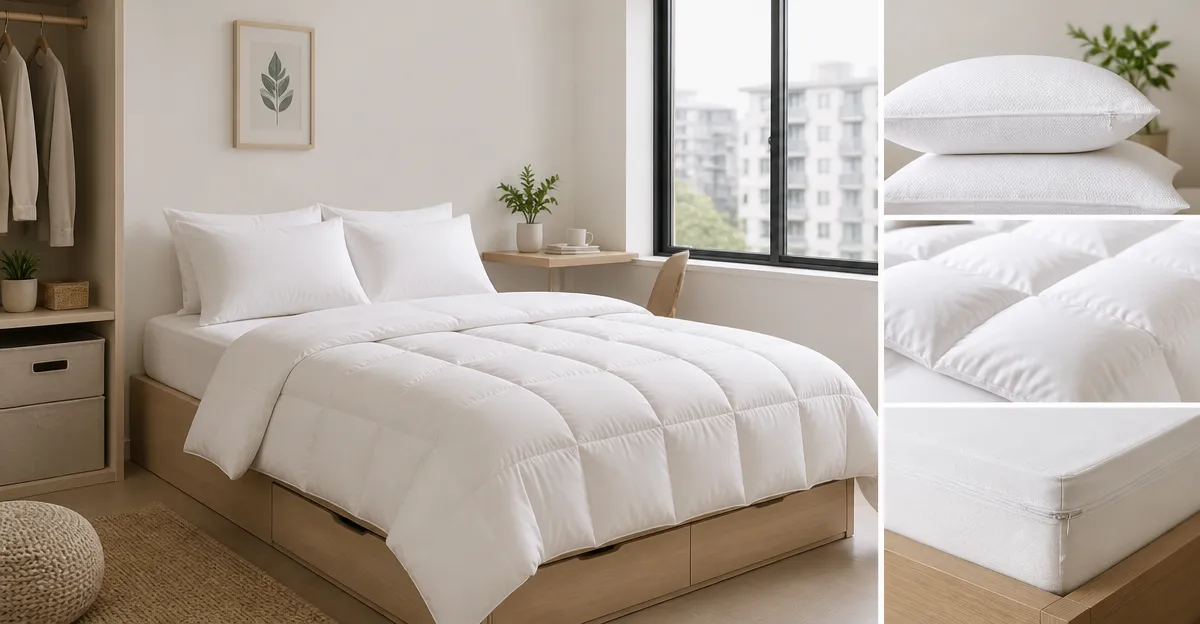
Introduction
This guide explains how to create a minimalist, eczema‑friendly bedroom in a small apartment. Readers will learn the science behind hypoallergenic textiles, discover space‑saving strategies, and receive curated product recommendations that balance comfort, protection, and price.
All recommendations are based on verified Amazon data, including price, rating, and verified customer sentiment. The guide does not require readers to purchase every item, but each product adds measurable value for those who need allergy control without sacrificing style.
By the end of the article, one will be able to select pillow protectors, comforters, and mattress encasements that reduce irritants, conserve floor space, and maintain a sleek aesthetic.
The recommendations respect the constraints of a small living area while prioritising skin health for eczema sufferers.
Background / Context
Eczema flare‑ups are often triggered by dust mites, pet dander, and synthetic fabrics that trap heat and moisture. A hypoallergenic bedding system creates a barrier that limits exposure to these irritants. The barrier must be breathable, washable, and durable enough to survive frequent laundering.
Small apartments present additional challenges: limited storage, multi‑functional furniture, and the desire for a clutter‑free look. Selecting items that fold, stack, or serve dual purposes helps preserve floor space while still delivering the protective qualities required for sensitive skin.
Key concepts include temperature regulation, moisture‑wicking, and the use of zippered enclosures that prevent allergens from penetrating the core pillow or mattress. Understanding these concepts enables informed purchasing decisions.
Finally, the guide distinguishes between allergy‑blocking technology (tight weaves, microfiber, cotton) and comfort‑focused design (soft brushing, down‑alternative fills) so that readers can prioritize according to personal needs.
Choosing Hypoallergenic Pillow Protectors
Pillow protectors are the first line of defense against dust mites and sweat that can exacerbate eczema. An effective protector must fully encase the pillow, feature a quiet zipper, and allow the pillowcase to glide smoothly.
The AllerEase Pillow Protector 4‑Pack offers a zippered design that completely seals standard and queen pillows. Its 88 % polyester and 12 % nylon blend provides temperature‑balancing technology borrowed from high‑performance athletic clothing, keeping the pillow cool in warm conditions and warm when the room is cold. The product holds a 4.8‑star rating from 4,491 reviews, and the lifetime warranty underscores confidence in durability.
For readers who need fewer units or a lower price point, the AllerEase Pillow Protector 2‑Pack delivers comparable allergen protection with a breathable fabric that does not retain heat. At a 4.7‑star rating from 9,894 reviews, customers praise its quiet surface and easy zip closure. Both protectors are machine washable, an essential feature for maintaining a clean sleep environment.
When selecting a protector, consider the pillow size, the desired quantity, and whether the zippered closure will interfere with a decorative pillowcase. The 4‑Pack is ideal for couples who rotate pillows or own multiple beds, while the 2‑Pack suits single‑person apartments.
Selecting an All‑Season Comforter
A comforter provides warmth, but it can also trap allergens if the fill is not hypoallergenic. Down‑alternative fills made from microfiber are generally safe for eczema‑prone skin because they do not shed feathers that could irritate the airway.
The Bare Home Queen Comforter Set combines a 300 GSM down‑alternative fill with a 100 % double‑brushed microfiber shell. The set includes a queen‑size comforter and two matching pillow shams, delivering a cohesive look without additional purchases. It carries a 4.6‑star rating from 41,139 reviews, with customers noting its lightweight feel, durability, and ability to stay warm without overheating.
The comforter’s all‑season design means it can be used year‑round, reducing the need for separate blankets that would consume valuable closet space. Its machine‑washable construction ensures that allergens are removed regularly, supporting skin health.
When space is at a premium, a single comforter that serves both as a blanket and decorative layer eliminates the need for bulky extra bedding, thereby preserving storage space.
Protecting the Mattress Surface
The mattress is a major reservoir for dust mites, bed bugs, and moisture. A waterproof, breathable encasement prevents these irritants from reaching the sleeper while maintaining a comfortable sleep surface.
The Hospitology Queen Mattress Encasement features a 100 % polyester outer layer with a polyurethane waterproof membrane. It stretches to fit mattresses from 12 inches to 18 inches deep, making it suitable for a variety of queen‑size beds. The product holds a 4.6‑star rating from 11,880 reviews, with users highlighting its soft feel, quiet operation, and effectiveness against bed bugs and dust mites.
Because the encasement is waterproof on all six sides, it protects against spills and pet accidents, a common concern in small apartments where pets often share the sleeping area. The breathable membrane prevents heat buildup, a crucial factor for eczema sufferers who experience night sweats.
Installation is straightforward thanks to a zippered closure and deep pockets that minimise bunching. The five‑year limited warranty adds confidence for long‑term use.
Comparison / Selection Guide
| Feature | AllerEase 4‑Pack | AllerEase 2‑Pack | Bare Home Comforter | Hospitology Mattress Encasement | FAUNNA Duvet Cover |
|---|---|---|---|---|---|
| Primary Protection | Allergen barrier, temperature‑balancing | Allergen barrier, breathable | Down‑alternative fill, hypoallergenic | Waterproof, dust‑mite & bed‑bug proof | Dust‑mite barrier, antimicrobial |
| Material Composition | 88 % polyester / 12 % nylon | 88 % polyester / 12 % nylon | 100 % double‑brushed microfiber | 100 % polyester outer, 100 % polyurethane liner | 100 % high‑thread‑count cotton |
| Price (USD) | 24.00 | 10.99 | 58.70 | 44.00 | 52.24 |
| Average Rating | 4.8 / 5 (4,491 reviews) | 4.7 / 5 (9,894 reviews) | 4.6 / 5 (41,139 reviews) | 4.6 / 5 (11,880 reviews) | 4.5 / 5 (132 reviews) |
| Best For | Full coverage, multiple pillows | Budget‑conscious single‑bed users | All‑season warmth without bulk | Water resistance and pest protection | High‑density cotton protection, antimicrobial |
Readers should match their primary concern—temperature control, waterproofing, or antimicrobial protection—with the product that scores highest in that category. For example, an eczema sufferer who sweats heavily at night would benefit most from the AllerEase 4‑Pack because of its temperature‑balancing fabric.
Best Practices & Tips
- Wash all bedding components weekly in hot water (at least 130 °F) to eliminate dust mites and bacteria.
- Rotate pillows and comforters every three months to distribute wear evenly and prevent localized moisture buildup.
- Use a low‑heat tumble dry setting to preserve the integrity of waterproof membranes and antimicrobial treatments.
- Store spare bedding in vacuum‑sealed bags to protect against dust while saving space.
- Pair a mattress encasement with a breathable pillow protector to create a fully sealed sleep environment without compromising airflow.
FAQ
Q1: Will a waterproof mattress encasement cause me to overheat?
A1: Modern waterproof encasements, such as the Hospitology Queen Mattress Encasement, incorporate a breathable polyurethane membrane that allows heat to escape while preventing liquid penetration.
Q2: Can I use a regular pillowcase over a zippered pillow protector?
A2: Yes. Both AllerEase protectors feature smooth zip edges that do not create noise, allowing a decorative pillowcase to slide over the protector without bunching.
Q3: How often should I replace a pillow protector?
A3: With proper care, a high‑quality protector can last several years. The lifetime warranty on the AllerEase 4‑Pack indicates confidence in long‑term durability.
Q4: Are cotton duvet covers suitable for hot sleepers?
A4: The FAUNNA Cotton Duvet Cover is made from breathable, high‑thread‑count cotton that wicks moisture and reduces heat buildup, making it appropriate for warm climates.
Q5: Do down‑alternative comforters trigger eczema?
A5: Down‑alternative fills are synthetic and hypoallergenic, eliminating the risk of feather allergens. The Bare Home Comforter Set uses a microfiber shell that further reduces irritation.
Q6: Is it necessary to buy a full set of bedding for a minimalist apartment?
A6: Not necessarily. Selecting multi‑purpose items—such as a comforter that doubles as a blanket and a pillow protector that also serves as a barrier for a decorative pillowcase—maximises functionality while minimising clutter.
Conclusion
This minimalist guide demonstrates that eczema‑friendly bedding can be both space‑saving and aesthetically pleasing. By understanding the role of temperature regulation, breathable waterproof membranes, and antimicrobial fabrics, readers can make informed choices that protect sensitive skin without sacrificing comfort.
Key takeaways include selecting a zippered pillow protector that matches pillow quantity, choosing an all‑season comforter with down‑alternative fill, and installing a stretchable mattress encasement for comprehensive pest protection. Applying the best‑practice tips will further extend the lifespan of each item and maintain a clean, hypoallergenic sleep environment.
Implementing these recommendations will empower individuals living in small apartments to create a healthy bedroom sanctuary that supports eczema management and promotes restful sleep.
Products Featured in This Guide
AllerEase Pillow Protector 4‑Pack
Price: $24.00 | Rating: 4.8/5 (4,491 reviews)
Featured for its temperature‑balancing fabric, full zip coverage, and lifetime warranty, making it ideal for multiple pillows in a compact bedroom.
AllerEase Pillow Protector 2‑Pack
Price: $10.99 | Rating: 4.7/5 (9,894 reviews)
Featured for its breathable, quiet fabric and affordable price, providing essential allergen protection for single‑person spaces.
Bare Home Queen Comforter Set
Price: $58.70 | Rating: 4.6/5 (41,139 reviews)
Featured for its ultra‑soft microfiber shell, down‑alternative fill, and all‑season design that reduces the need for additional blankets.
Hospitology Queen Mattress Encasement
Price: $44.00 | Rating: 4.6/5 (11,880 reviews)
Featured for its waterproof, stretchable design that protects against bed bugs, dust mites, and spills while remaining breathable.
FAUNNA Cotton Duvet Cover Queen
Price: $52.24 | Rating: 4.5/5 (132 reviews)
Featured for its high‑density cotton weave, Microban antimicrobial treatment, and hidden zipper that offers a sleek, allergen‑blocking finish.
Frequently Asked Questions
What makes a bedding material hypoallergenic for eczema sufferers?
Hypoallergenic bedding is made from breathable, natural fibers like cotton or bamboo that resist dust mites, reduce heat buildup, and can be washed frequently without degrading.
How can I save floor space while still protecting my mattress from allergens?
Use a thin, zippered mattress encasement that covers the entire mattress and a low‑profile pillow protector, eliminating the need for bulky box springs or extra layers.
Are there affordable minimalist bedding options that still meet eczema‑friendly standards?
Yes, many Amazon‑listed products combine high ratings, low prices, and certifications such as Oeko‑Tex or CertiPUR‑US, offering budget‑friendly, skin‑safe choices.
What is the best way to maintain the cleanliness of eczema‑friendly bedding in a small apartment?
Wash all bedding components weekly in hot water (130°F/54°C) and tumble dry on low heat to kill dust mites while preserving fabric integrity.
Can I incorporate style into a minimalist eczema‑friendly bedroom without compromising skin health?
Choose neutral‑colored, simple designs and mix textures like smooth cotton sheets with a sleek, low‑profile comforter to keep the space aesthetic while staying allergen‑safe.