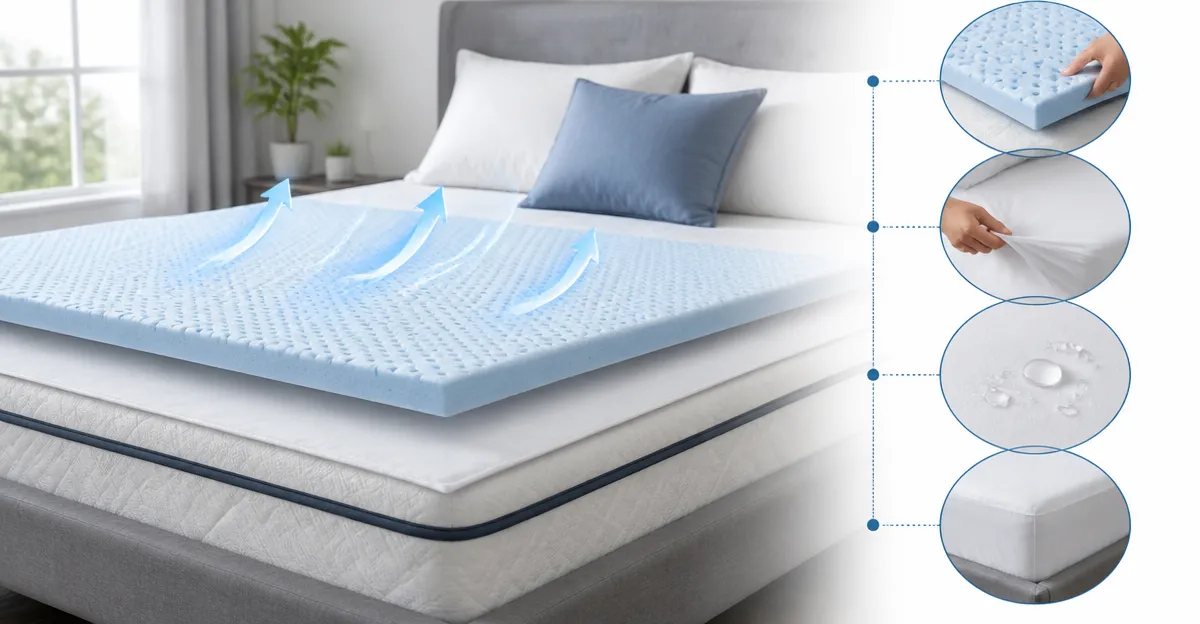
How to Layer a Cooling Topper and Waterproof Protector Without Trapping Heat: Step‑by‑Step Guide
Introduction
One will learn how to combine a cooling mattress topper with a waterproof protector in a manner that preserves airflow and prevents heat buildup. This knowledge is valuable for households with children, pets, or incontinence concerns while still prioritising a cool sleeping environment. The guide balances practicality with comfort, ensuring that the mattress remains protected without sacrificing temperature regulation. Readers will gain confidence to create a breathable, protected bed that lasts for years.
What You'll Need
- SafeRest Mattress Protector – $23.03, 4.6★ (280,742 reviews)
- PlushDeluxe Bamboo Mattress Protector – $31.99, 4.6★ (44,145 reviews)
- BEDLORE Mattress Protector – $22.78, 4.6★ (30,031 reviews)
- BEDLORE Mattress Topper – $36.07, 4.3★ (17,361 reviews)
- GRUSIGN Cooling Mattress Topper – $22.60, 4.3★ (1,096 reviews)
- Clean, dry sheets and a low‑heat dryer (for washing protectors)
Step‑by‑Step Instructions
Step 1: Prepare the Mattress Surface
Before adding any layers, ensure the mattress is free of dust, debris, and moisture. Use a vacuum or a lint‑roller to remove particles that could compromise the fit of later layers. Allow the mattress to air out for at least fifteen minutes if it feels warm from recent use. A clean base guarantees that both the protector and topper adhere properly without shifting.
Step 2: Install a Waterproof Protector
Place a waterproof protector directly on the mattress to guard against spills, pet accidents, and night‑time incontinence. The SafeRest Mattress Protector offers a quiet, breathable design that fits Queen‑size beds perfectly. Its fully waterproof TPU layer prevents liquids from reaching the mattress while remaining silent, a key advantage over vinyl protectors that can create a crinkling noise. Priced at $23.03 with a 4.6‑star rating, it combines affordability with durability.
Alternative options include the PlushDeluxe Bamboo Mattress Protector, which adds a bamboo‑viscose top layer for extra softness, and the BEDLORE Mattress Protector, notable for its quilted style and deep‑pocket fit up to 18 inches. Choose the protector that best matches your comfort preference and mattress depth.
To install, align the protector’s corners with the mattress corners, then stretch the elasticized skirt around the sides. Ensure a snug fit; a loose protector will create gaps where liquids can seep. The fitted‑sheet‑like design of these protectors eliminates the need for additional straps.
Step 3: Add the Cooling Mattress Topper
After the waterproof layer is secure, place a cooling topper to regulate temperature. The GRUSIGN Cooling Mattress Topper utilizes 60% polyester and 40% bamboo‑derived viscose, delivering a silky feel that dissipates heat. Its 5D & 7D snow‑down alternative fill stays evenly distributed, preventing clumping that could trap warmth. Priced at $22.60 with a 4.3‑star rating, it offers high‑value cooling without excessive cost.
The BEDLORE Mattress Topper provides a similar bamboo‑viscose blend but adds a pillow‑top thickness for added plushness. Its deep‑elastic pocket fits mattresses from 8‑20 inches, ensuring the topper remains in place throughout the night. At $36.07 and a 4.3‑star rating, it is ideal for sleepers who desire both cooling and a luxurious lift.
Lay the topper flat, aligning its edges with the protector. Press gently to smooth out any air pockets. Because the protector is waterproof yet breathable, the topper can release heat while the protector blocks moisture, creating a synergistic effect.
Step 4: Secure the Layers
To prevent shifting, tuck the fitted sheet under the mattress after the topper is positioned. This creates a “sandwich” that holds both the protector and topper tightly. If the mattress is particularly deep, consider using sheet clips or a non‑slip mattress pad underneath to add extra friction. The deep‑pocket design of the BEDLORE and SafeRest protectors eliminates most movement, but securing the sheet adds an extra layer of stability.
For households with active pets or children, a lightweight, breathable sheet can be placed on top of the topper. Choose a cotton or bamboo blend that complements the cooling properties of the topper. This final sheet also protects the topper’s surface from dust and minor spills.
Step 5: Final Bedding and Maintenance
Complete the bed with your preferred pillows and blankets. When washing, follow the manufacturer’s instructions: machine wash protectors on a cold, gentle cycle and tumble dry on low heat. The SafeRest protector advises low‑heat drying to avoid damaging the waterproof membrane. The PlushDeluxe protector requires similar care, emphasizing that high temperatures can melt the polyurethane barrier.
Topper care varies; the GRUSIGN topper is machine washable, while the BEDLORE topper recommends spot cleaning and occasional air‑drying to preserve its loft. Rotate the topper every three months to ensure even wear and maintain its cooling efficiency.
Tips & Pro Tips
- Allow the topper to fully expand for 24 hours after unpacking; this maximises its breathability.
- Use a low‑heat setting for dryer cycles; excessive heat can compromise waterproof layers.
- For hot climates, pair a cooling topper with breathable bamboo sheets to enhance airflow.
- Consider a mattress foundation with slats spaced no more than 3 inches to promote air circulation beneath the protector.
- If pets frequently target the bed, keep a pet‑friendly spray nearby to treat accidents before they soak into the protector.
Troubleshooting
- Heat Retention: If the bed feels warm, verify that the protector is truly breathable. Switch to a bamboo‑based protector like PlushDeluxe, which offers a softer, more breathable top layer.
- Slipping Layers: Ensure the elastic skirt fully encircles the mattress. Adding a fitted sheet underneath creates friction that keeps the protector and topper from sliding.
- Water Leakage: Test the protector by pouring a small amount of water on the surface. If any moisture seeps through, the protector may be damaged and should be replaced.
Conclusion
One now possesses a clear, actionable method to layer a cooling topper and waterproof protector without trapping heat. By selecting the appropriate protector—such as SafeRest for quiet waterproof protection—or a bamboo‑enhanced option, and pairing it with a cooling topper like GRUSIGN or BEDLORE, the bed remains both cool and safeguarded. Regular maintenance and proper installation ensure longevity and comfort for years to come.
Frequently Asked Questions
What is the correct order for layering a cooling mattress topper and a waterproof protector?
Place the waterproof protector directly on the mattress, then add the cooling topper on top to maintain airflow while keeping the mattress dry.
How can I prevent heat buildup when using a waterproof protector?
Choose a breathable, waterproof protector with ventilation channels and avoid plastic‑backed pads that trap air.
Do cooling toppers work with all types of waterproof protectors?
Most cooling toppers work best with thin, breathable protectors; thick vinyl or rubberized pads can block the topper’s cooling technology.
Can I wash the waterproof protector without damaging its cooling performance?
Yes—follow the manufacturer’s washing instructions, typically a gentle cycle with mild detergent, and air‑dry to preserve breathability.
Is it necessary to replace the protector or topper regularly to maintain cooling?
Replace the protector every 2–3 years and the cooling topper according to wear, as compression or loss of waterproof coating reduces effectiveness.