How to Set Your Washing Machine for Eczema‑Friendly Laundry: Best Cycles, Temperatures, and Detergent Tips
Introduction
People with eczema often experience flare‑ups triggered by harsh chemicals, high heat, or residual detergent on fabrics. This guide explains how to configure a washing machine to minimise irritation while achieving a thorough clean. Readers will learn which cycles, water temperatures, and hypoallergenic detergents provide the safest environment for sensitive skin. By following these steps, one can protect skin health, extend garment life, and reduce the need for costly medical treatments.
What You’ll Need
- Hypoallergenic liquid detergent (e.g., All Free Clear Laundry Detergent)
- Alternative ultra‑concentrated detergent (Persil Free & Sensitive Detergent)
- Plant‑based detergent for eco‑conscious households (ECOS Lavender Laundry Detergent)
- Detergent sheets for travel or space‑saving storage (Zimwin Laundry Detergent Sheets)
- Mesh laundry bags for delicates
- Measuring cup (if using liquid detergent)
Step 1: Sort and Prepare Your Laundry
Begin by separating garments based on colour, fabric type, and level of soil. Dark colours should be washed separately to avoid dye transfer, while delicate items such as baby clothes or undergarments benefit from a mesh bag. For eczema‑prone individuals, it is advisable to keep heavily soiled work clothes away from everyday wear to prevent cross‑contamination of irritants. Once sorted, inspect pockets for objects that could damage the machine or cause skin irritation.
Step 2: Choose the Correct Cycle
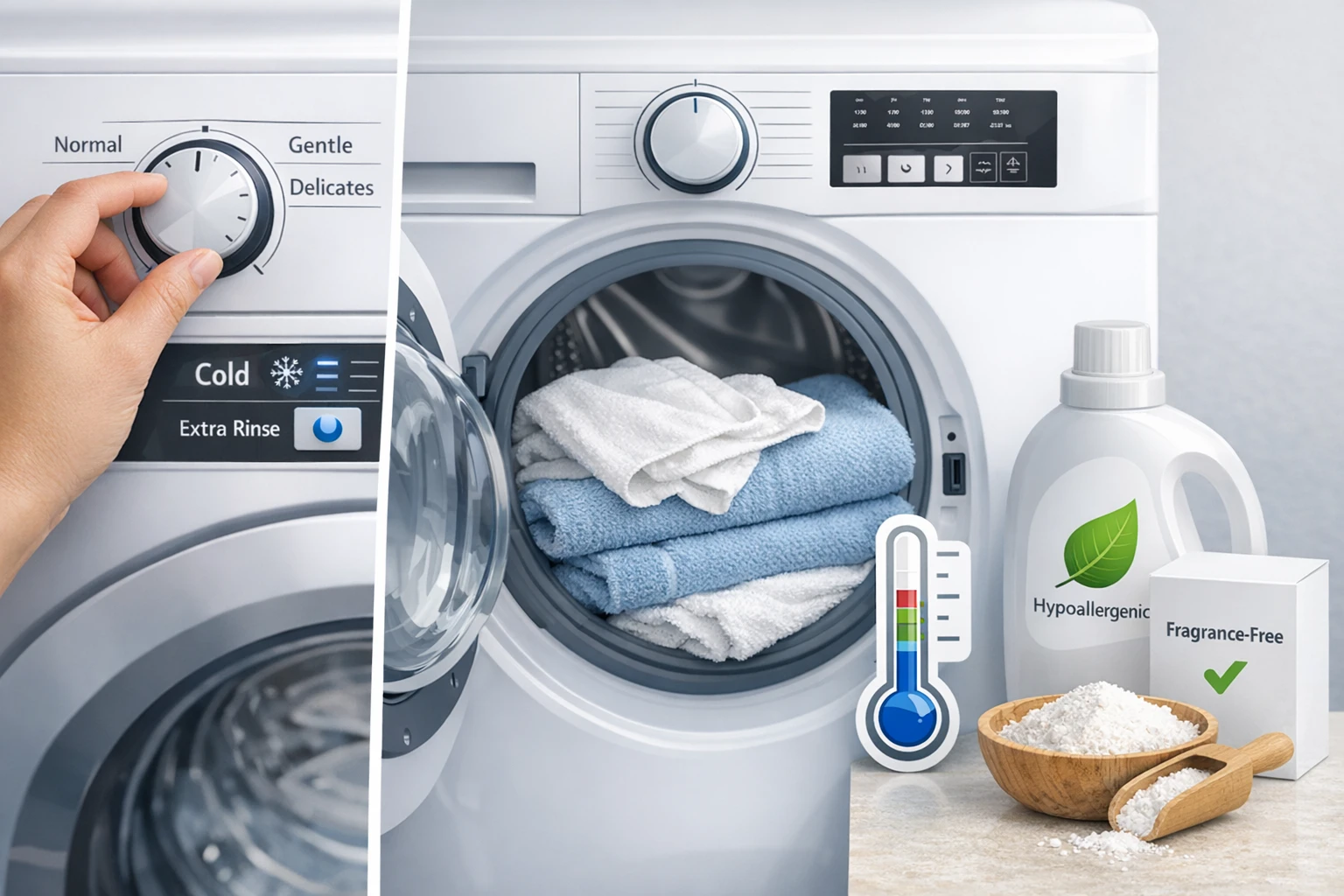
Select a cycle that provides sufficient agitation without excessive mechanical stress. The "Gentle" or "Delicates" cycle is ideal for most eczema‑sensitive fabrics because it uses slower spin speeds and reduced agitation, limiting friction that can embed detergent residues into fibres. If the load contains heavily soiled items such as sportswear, the "Normal" cycle can be used, but follow it with an extra rinse to remove any lingering particles. Modern machines often include an "Allergen" or "Skin‑Care" setting; these automatically add an extra rinse and are worth using whenever available.
Step 3: Set the Water Temperature
Warm water (30‑40°C / 86‑104°F) effectively dissolves detergent while remaining gentle enough to avoid triggering heat‑related skin irritation. Cold water (below 20°C / 68°F) is acceptable for lightly soiled garments but may leave detergent film on synthetic fibres, which can provoke eczema flare‑ups. For stubborn stains, a brief pre‑soak in lukewarm water with a small amount of hypoallergenic detergent is recommended before the main wash. Avoid hot cycles above 60°C (140°F) unless the fabric label explicitly permits it, as high heat can degrade skin‑friendly fibres and increase the likelihood of irritation.
Step 4: Add the Appropriate Detergent
Using a detergent formulated for sensitive skin is the most critical factor in preventing eczema reactions. All Free Clear Laundry Detergent offers a 2X concentrated, fragrance‑free formula that is 100% dye‑free and hypoallergenic. Priced at $18.19 with a 4.7‑star rating from over 3,000 reviews, it provides enough cleaning power for 90 loads while requiring only a small dosage per wash. The OXI technology brightens fabrics without harsh chemicals, making it suitable for both whites and colours.
For users who prefer a brand with a strong reputation for stain removal, Persil Free & Sensitive Detergent delivers an ultra‑concentrated, fragrance‑free solution that works well in cold water. At $22.88 and a 4.7‑star rating from 3,736 reviewers, it includes fabric‑protection technology that helps maintain colour vibrancy, an advantage for families that wash coloured garments frequently.
Eco‑conscious households may opt for ECOS Lavender Laundry Detergent. Although scented with a mild lavender aroma, the fragrance is derived from natural essential oils and is generally well‑tolerated by sensitive skin. Priced at $26.55 for 200 loads and holding a 4.5‑star rating, it is vegan, phosphate‑free, and EPA Safer Choice certified, reducing the risk of chemical irritation.
If space or travel is a concern, Zimwin Laundry Detergent Sheets provide a pre‑measured, plastic‑free alternative. Each sheet dissolves in both hot and cold water, eliminating the need for measuring cups. At $9.99 for 200 sheets and a 4.4‑star rating, they are especially useful for dorms, camping trips, or households seeking to reduce plastic waste.
When adding liquid detergent, measure the recommended amount using the cap or a standard measuring cup. Over‑dosing can leave residues that aggravate eczema, while under‑dosing may result in incomplete cleaning and lingering allergens.
Step 5: Optimize Rinse and Spin Settings
After the wash cycle, select an extra‑rinse option if your machine offers it. An additional rinse flushes out any remaining detergent particles that could irritate the skin. For front‑load machines, a low‑speed spin (400‑800 RPM) reduces creasing and limits the need for harsh ironing, which can also cause skin irritation. If the fabric is particularly delicate, consider a “spin‑free” option and allow garments to air‑dry.
Tips & Pro Tips
- Always store detergent in a cool, dry place to preserve its efficacy; heat can break down surfactants, reducing cleaning power.
- Run an empty hot‑water cycle with a cup of white vinegar once a month to descale the machine and prevent detergent buildup.
- Use mesh laundry bags for items such as socks, underwear, and baby clothes to minimise friction and protect delicate fibres.
- For extra softness without fabric softener (which can contain fragrances), add a half‑cup of white vinegar to the final rinse; it neutralises residual detergent and softens fibres naturally.
- When travelling, pack a few Zimwin Laundry Detergent Sheets in a zip‑lock bag to avoid spills and save luggage weight.
Troubleshooting
Problem: Clothes feel stiff or have a lingering scent after washing.
Solution: Increase the number of rinse cycles and add ½ cup of white vinegar to the final rinse. Ensure the detergent dosage matches the load size; excess detergent can cause film buildup.
Problem: Persistent stains on eczema‑sensitive skin garments.
Solution: Pre‑treat stains with a small amount of Persil Free & Sensitive Detergent directly on the spot, let it sit for 5‑10 minutes, then wash using the gentle cycle with warm water.
Conclusion
By selecting the appropriate cycle, temperature, and hypoallergenic detergent, one can dramatically reduce the risk of eczema flare‑ups caused by laundry. The steps outlined above empower readers to create a skin‑friendly washing routine that preserves garment quality and supports overall health. Implement these practices consistently, and enjoy clean, comfortable clothing without compromising sensitive skin.
Products Mentioned in This Guide
Frequently Asked Questions
What water temperature is safest for washing eczema‑prone skin?
Use warm water (30‑40°C or 86‑104°F) to effectively clean without the irritation that high heat can cause.
Which wash cycle works best for removing detergent residues?
Select a gentle or delicate cycle with an extra rinse option to ensure all soap is rinsed away.
What type of detergent should people with eczema choose?
Opt for hypoallergenic, fragrance‑free liquid detergents like All Free Clear or Persil Free & Sensitive.
Can I use dryer sheets or fabric softeners on eczema‑friendly laundry?
Avoid them; they often contain fragrances and chemicals that can trigger flare‑ups.
How often should I clean my washing machine to prevent skin irritation?
Run an empty hot‑water cycle with white vinegar or a washing‑machine cleaner monthly to remove buildup.