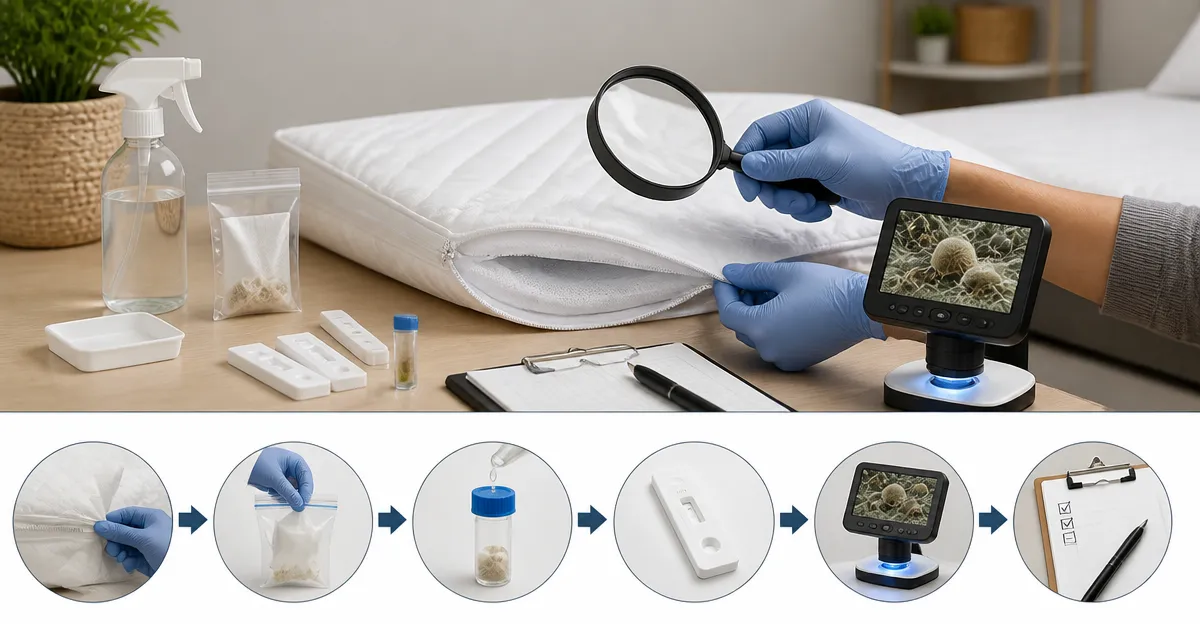
Introduction
When one purchases a secondhand mattress protector, the presence of hidden allergens such as dust mites, mold spores, or residual chemicals can compromise sleep quality and health. This guide will teach the reader how to assess a used protector for common allergens using inexpensive tools, visual checks, and laboratory‑grade testing methods that can be performed at home. By following the outlined steps, one will gain confidence that the protector is safe, or identify the need for replacement before it affects the sleeping environment. The information is valuable for anyone who wishes to protect their investment and maintain a hygienic bedroom.
What You’ll Need
- Disposable gloves and a face mask to avoid direct contact with potential allergens.
- White cotton swabs for sample collection.
- Clear zip‑lock bags for storing collected samples.
- Microscope slide or a magnifying glass with at least 10x magnification.
- Allergen test strips (e.g., dust‑mite or mold detection kits).
- Cleaning solution such as a mild detergent mixed with warm water.
- Drying rack or clean towel.
- Optional: BEDLORE Waterproof Mattress Protector – a reliable protective barrier for future use.
Step‑by‑Step Instructions
Step 1: Prepare a Controlled Testing Area
Designate a well‑ventilated surface, such as a clean table, where the protector can be laid flat without interference from other fabrics. Place a disposable sheet or clean towel underneath to prevent cross‑contamination from the underlying surface. Wear disposable gloves and a face mask to minimize exposure to any airborne particles that may be released during handling. Ensure that the room temperature is moderate, as extreme heat or cold can alter the behavior of dust mites and mold spores during observation.
Step 2: Conduct a Visual Inspection
Examine the protector under bright, natural light or a lamp with a daylight bulb. Look for discoloration, stains, or visible mold growth, especially along seams and the elastic skirt. Use a magnifying glass to spot tiny specks that may indicate dust‑mite fecal matter, which often appears as fine, dark particles. If any suspicious areas are found, note them for further testing; otherwise, proceed to the sampling stage.
Step 3: Collect Surface Samples
Using a sterile white cotton swab, gently rub a 5 cm × 5 cm area of the protector where visual inspection indicated potential contamination, or choose a central location if none was observed. Rotate the swab while applying light pressure to lift microscopic particles onto the tip. Immediately place the swab into a clear zip‑lock bag, seal it, and label it with the date and location on the protector. Repeat this process on at least three different zones to obtain a representative sample set.
Step 4: Perform Rapid Allergen Testing
Open an allergen test strip kit according to the manufacturer’s instructions. Transfer the swab tip onto the designated area of the strip, ensuring even contact. Wait the prescribed reaction time, typically five to ten minutes, and then compare the resulting color change against the provided chart. A positive result for dust mites or mold indicates the presence of allergenic proteins that could trigger respiratory issues. Record the outcomes in a notebook for reference.
Step 5: Microscopic Confirmation (Optional)
If a microscope or a high‑magnification lens is available, place the swab tip on a microscope slide, add a drop of distilled water, and cover with a coverslip. Observe the slide at 10‑40x magnification to identify characteristic shapes: dust‑mite bodies are oval and translucent, while mold spores appear round with rough edges. This step provides visual confirmation of the rapid test and helps differentiate between harmless debris and true allergens.
Step 6: Clean or Replace the Protector
When test results are negative, the protector can be cleaned before use. Mix a mild detergent with warm water, submerge the protector, and gently agitate for five minutes. Rinse thoroughly and allow it to air‑dry on a clean rack, ensuring it is completely dry before placing it on the mattress. If any test yields a positive result, it is advisable to replace the protector with a new, certified waterproof barrier. The BEDLORE Waterproof Mattress Protector offers a 100 % waterproof TPU layer, ultra‑soft noiseless fabric, and deep‑pocket fit, making it an excellent choice for individuals seeking both protection and comfort.
Tips & Pro Tips
- Perform testing in a low‑humidity environment; high humidity can cause mold spores to become more active and may skew results.
- Store collected swabs in a refrigerator if testing will be delayed for more than 24 hours to preserve sample integrity.
- When washing a protector, avoid bleach as it can degrade waterproof membranes and reduce the lifespan of the product.
- Consider using a PlushDeluxe Bamboo Mattress Protector for its hypoallergenic bamboo viscose fabric, which naturally resists dust‑mite colonization.
- For maximum protection against bed bugs and dust mites, a zippered encasement such as the Utopia Bedding Mattress Encasement provides 360° coverage and a secure seal.
Troubleshooting
Problem: Test strips show a faint color change that is difficult to interpret.
Solution: Repeat the sampling on a fresh area of the protector and ensure the swab is fully saturated with the surface material. Use a fresh test strip to avoid contamination from previous reactions.
Problem: The protector retains a strong odor after washing.
Solution: Add a cup of white vinegar to the rinse cycle to neutralize lingering smells, then air‑dry in sunlight for additional deodorizing effect.
Conclusion
Testing a secondhand mattress protector for allergens does not require expensive laboratory equipment; a systematic approach using simple tools can yield reliable results. By preparing a clean testing area, conducting visual inspections, collecting swab samples, applying rapid test strips, and optionally confirming findings under magnification, one can determine whether a used protector is safe for continued use. When allergens are detected, replacing the protector with a high‑quality, waterproof option such as the BEDLORE Waterproof Mattress Protector ensures long‑term protection and comfort. Implementing the tips and troubleshooting advice provided will further enhance the accuracy of the assessment and maintain a healthy sleep environment.
Products Mentioned in This Guide
Frequently Asked Questions
How can I visually inspect a secondhand mattress protector for allergens?
Look for stains, discoloration, mildew spots, or a musty odor, and use a 10x magnifying glass to spot dust mites or mold spores.
What basic tools do I need to test a used mattress protector at home?
Disposable gloves, a face mask, white cotton swabs, zip‑lock bags, a magnifier or microscope slide, and allergen test strips.
Can I use over‑the‑counter test strips to detect dust mites and mold?
Yes, dust‑mite and mold detection kits work by exposing a sample to a reagent that changes color if allergens are present.
How do I collect a sample from the mattress protector for testing?
Wear gloves and a mask, swab a 5 cm² area with a cotton swab, place the swab in a zip‑lock bag, and follow the test‑strip instructions.
What should I do if the allergen test indicates contamination?
Wash the protector with mild detergent and warm water, dry it thoroughly, and if results persist, replace the protector to ensure a healthy sleep environment.