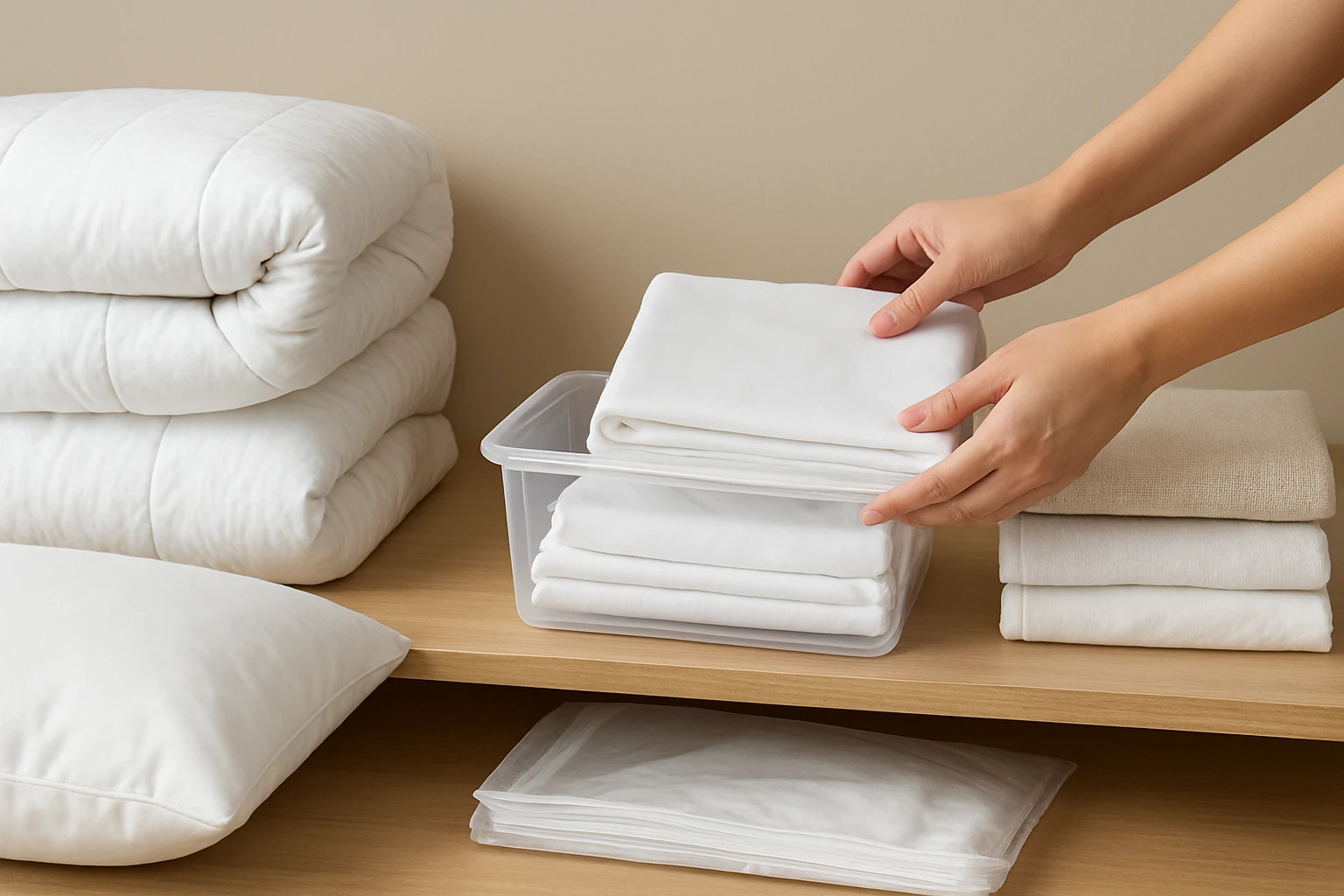
How to Store Out-of-Season Bedding to Prevent Dust Mites: 8 Proven Steps to Keep It Clean and Allergen-Free
Introduction
Properly storing out-of-season bedding protects fabrics from dust mites, mold, and loss of softness. This guide explains eight proven steps that will keep your blankets, comforters, and pillows clean, fresh, and ready for the next season. Readers will learn how to prepare bedding, select the most appropriate storage tools, and maintain an allergen‑free environment. By following these instructions, one can extend the lifespan of valuable linens while reducing indoor allergens.
What You’ll Need
- Cleaning supplies (mild detergent, lint roller)
- Drying area or dryer
- Protective storage containers (see product recommendations below)
- Labeling materials (tags, marker)
- Optional: cedar blocks or lavender sachets for natural moth deterrence
Step 1: Inspect and Sort Your Bedding
Begin by gathering all out-of-season bedding in a well‑lit area. Separate items by type—comforters, blankets, pillowcases—and check each piece for stains, tears, or signs of mold. Remove any damaged items to avoid contaminating healthy linens. This initial inspection ensures that only clean, intact pieces enter the storage system, reducing the risk of dust mite colonization.
Step 2: Wash and Thoroughly Dry
Wash each item using a mild detergent and the warmest water setting safe for the fabric. Adding a cup of white vinegar during the rinse cycle helps neutralize residual allergens. After washing, dry the bedding completely either on a line in direct sunlight or in a dryer on a low‑heat setting. Moisture is a primary catalyst for dust mite growth; therefore, ensuring complete dryness is essential before storage.
Step 3: Choose the Appropriate Storage Method
There are three primary storage strategies: breathable fabric bags, clear oversized moving bags, and vacuum‑compression bags. Breathable fabric bags such as the Lifewit Clothes Storage Bins allow air circulation while protecting against dust. Oversized moving bags like the BALEINE Oversized Moving Bags provide a sturdy, water‑resistant barrier for items that do not require breathability. For maximum space savings, the Hefty Vacuum Storage Bags compress bulky comforters while sealing out allergens.
Step 4: Pack Bedding into Selected Containers
If using Lifewit Clothes Storage Bins, fold each item neatly and place it inside the bin, ensuring the clear window remains visible for quick identification. The bins feature reinforced handles, a breathable non‑woven fabric, and a sturdy #5 stainless steel zipper, making them durable for long‑term use. They are priced at $15.99 and hold a 4.6‑star rating from over 107,000 reviewers, indicating reliable performance.
When opting for BALEINE Oversized Moving Bags, roll the bedding rather than folding to minimize creasing. Each bag measures 27" × 15" × 14" and can support up to 50 lb, providing a 24‑gallon capacity. The reinforced plastic handles distribute weight evenly, preventing handle failure during transport. At $23.98 with a 4.8‑star rating from nearly 14,000 reviews, these bags are a cost‑effective alternative to cardboard boxes.
For vacuum compression, place the cleaned bedding inside a Hefty Vacuum Storage Bag and use a household vacuum or the included hand pump to remove air. The bags shrink up to 80 % of their original volume, allowing five queen‑size comforters to fit inside a single bag. The airtight seal blocks dust mites and moisture, and the reusable design promotes sustainability. Priced at $17.98 with a 4.3‑star rating, they offer excellent value for space‑constrained closets.
Step 5: Seal and Label
After packing, close each container securely. For fabric bins and moving bags, engage the zipper fully and press the top flap down to create a tight seal. For vacuum bags, ensure the valve is closed after air removal. Attach a label to the tag pocket (available on the BALEINE bag) or use a permanent marker on the bin’s clear window. Include the season, type of bedding, and storage date to facilitate future retrieval.
Step 6: Store in an Ideal Environment
Place the sealed containers in a cool, dry area away from direct sunlight. A closet with stable temperature and low humidity is optimal. Avoid storing near heating vents or damp basements, as excess moisture encourages dust mite proliferation. If space permits, keep the containers on a shelf rather than directly on the floor to reduce exposure to ground‑level dust.
Step 7: Periodically Inspect and Refresh
Every three to six months, open each container briefly to allow airflow, especially for breathable bins. Check for signs of moisture, mold, or pest activity. If any odor or discoloration is detected, re‑wash the affected item and replace the storage bag if necessary. Regular inspection prevents long‑term infestations and maintains the integrity of the bedding.
Step 8: Implement Additional Allergen Controls
To further deter dust mites, place cedar blocks, lavender sachets, or silica gel packets inside the storage area. These natural repellents absorb residual humidity and emit a scent that discourages mites. Combine these measures with the sealed containers for a comprehensive defense against allergens.
Tips & Pro Tips
- Do not overload containers; excess weight can strain handles and compromise seals.
- Use a lint roller on bedding before washing to remove surface dust and pet hair.
- Consider adding a thin layer of breathable cotton muslin between folded items for extra protection.
- When using vacuum bags, avoid over‑compressing delicate fabrics such as silk or cashmere.
Troubleshooting
Problem: Persistent odor after storage.
Solution: Remove the bedding, re‑wash with a cup of baking soda, and dry in direct sunlight before repacking.
Problem: Zipper jam on a fabric bin.
Solution: Apply a small amount of silicone lubricant to the zipper teeth and gently work the slider back and forth.
Conclusion
By following these eight steps, one can store out‑of‑season bedding in a manner that prevents dust mites, preserves fabric quality, and maximizes closet space. The recommended products—Lifewit Clothes Storage Bins, BALEINE Oversized Moving Bags, and Hefty Vacuum Storage Bags—provide reliable, affordable solutions for each storage scenario. Implement the outlined practices to enjoy fresh, allergen‑free bedding year after year.
Products Mentioned in This Guide
Frequently Asked Questions
What is the best way to clean bedding before storage?
Wash each item with a mild detergent, rinse thoroughly, and dry completely to prevent mold and dust mites.
Should I use plastic bags or breathable containers for storing bedding?
Use breathable storage containers or cotton bags; they allow air circulation and reduce moisture buildup compared to sealed plastic.
How can I deter moths naturally while storing bedding?
Place cedar blocks or lavender sachets inside the storage containers to repel moths without chemicals.
Do I need to label stored bedding, and why?
Yes, labeling each container with its contents and season helps locate items quickly and prevents unnecessary handling.
How often should I check stored bedding for signs of pests or moisture?
Inspect the storage area every 2–3 months for mold, moisture, or pests, and air‑out the items if needed.