How to Test Mattress Protector Seams for Waterproof Leaks: Easy Step-by-Step DIY Guide
Introduction
One often wonders whether a mattress protector truly prevents liquids from reaching the mattress. This guide explains how to evaluate the waterproof performance of a protector by testing its seams for leaks. The reader will learn a systematic method that requires minimal equipment and produces reliable results. Mastering this skill protects a mattress investment and ensures a healthy sleeping environment.
What You’ll Need
- One Utopia Bedding Full Waterproof Mattress Protector
- Two large white towels or absorbent cloths
- A measuring cup (250 ml) for water
- A marker to label test zones
- A flat, hard surface such as a wooden board or floor
- Optional: a spray bottle for fine‑mist testing
Step 1: Prepare a Controlled Test Area
First, lay the wooden board on a level floor to prevent any movement during testing. Place one white towel on the board; this towel will reveal any moisture that passes through the protector. Next, unfold the Utopia Bedding Full Waterproof Mattress Protector and stretch it over the board, ensuring the deep‑pocketed corners are fully encased.
The protector features a 100 % polyester surface with a TPU backing that claims to stop liquids. Its fitted‑style all‑around elastic creates a secure fit, which is essential for an accurate leak test because gaps could produce false positives. Verify that the elastic bands are evenly tensioned around the perimeter. Mark four quadrants on the protector with the marker to keep track of where each test will occur.
Step 2: Apply a Measured Water Volume
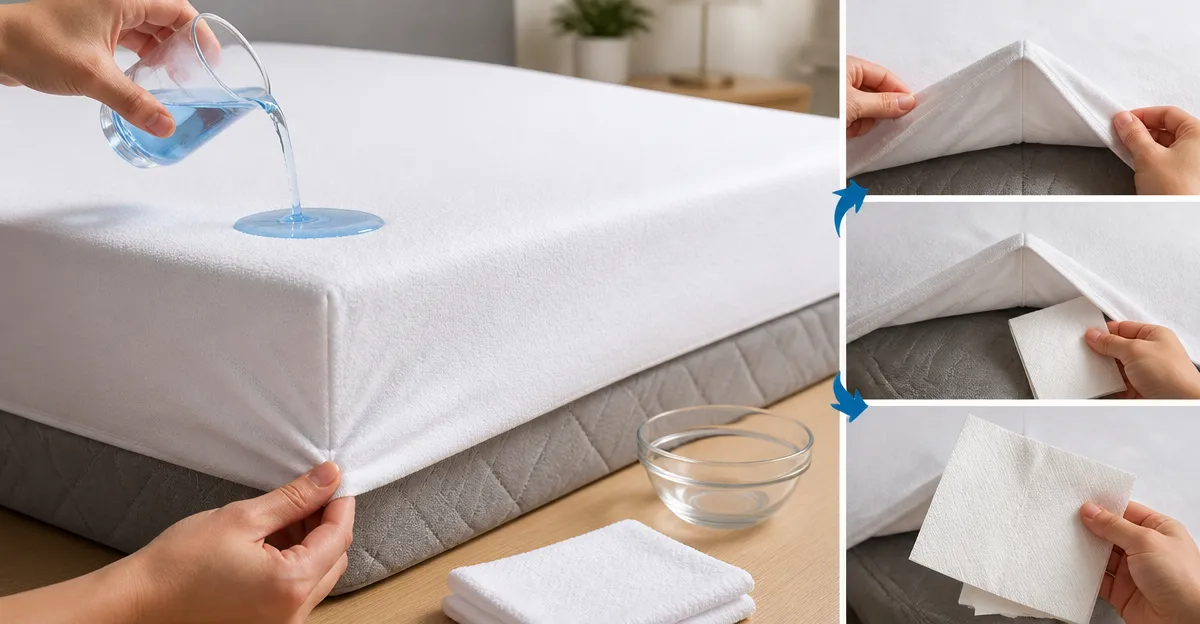
Measure 250 ml of water using the measuring cup; this volume simulates a typical spill such as a glass of juice. Slowly pour the water onto the center of the first quadrant, allowing it to spread naturally. The waterproof terry top of the protector is designed to absorb the liquid on the surface while the TPU layer repels it, preventing penetration.
Observe the towel beneath for any signs of dampness. If the towel remains dry after two minutes, the seam in that quadrant has successfully resisted leakage. Record the result before moving to the next quadrant. Repeating the process on each side ensures a comprehensive assessment of all seams.
Step 3: Test the Deep Pocket Seams
The deep‑pocketed design accommodates mattresses up to 15 inches thick, but the seam where the pocket folds can be a vulnerability. To test this area, lift the protector slightly at a corner and pour another 250 ml of water directly onto the folded seam.
The TPU backing is engineered to seal around the edge, yet repeated stress may expose weak points. Monitor the towel for moisture; any wet spot indicates a seam failure. If a leak is detected, consider re‑positioning the protector or using a seam sealant specifically designed for fabric.
Step 4: Conduct a Fine‑Mist Spray Test (Optional)
For a more subtle evaluation, fill a spray bottle with water and mist the entire surface lightly. This method mimics everyday spills such as condensation from a humid night.
The fine mist will travel along the seams, revealing micro‑leaks that a larger volume might miss. After spraying, inspect the towel for any droplets. This step is optional but adds an extra layer of confidence for users who demand the highest level of protection.
Step 5: Document Findings and Interpret Results
Create a simple table noting each quadrant, the type of test performed, and whether moisture was observed. A fully waterproof protector will show zero leaks across all zones.
If any quadrant reports a leak, evaluate whether the issue stems from improper fitting, a manufacturing defect, or damage incurred during use. The Utopia Bedding protector’s rating of 4.5 out of 5 stars from over 103,000 reviewers suggests consistent quality, yet occasional defects can occur.
Step 6: Maintain and Re‑Test Periodically
Even a high‑quality protector benefits from periodic re‑testing, especially after several washes. The care instructions recommend machine washing on a cold gentle cycle and tumble drying on low heat; following these guidelines preserves the TPU backing and elastic integrity.
Schedule a leak test every six months to ensure continued performance. Regular maintenance extends the lifespan of both the protector and the mattress beneath it.
Tips & Pro Tips
- Use a white towel with a high‑contrast color to easily spot moisture.
- Perform the test in a well‑lit area to avoid missing faint damp spots.
- If a leak is found, apply a fabric‑friendly waterproof sealant to the seam and retest.
- Do not use fabric softener when washing, as it can degrade the TPU layer.
- Allow the protector to air dry completely before retesting.
Troubleshooting
Problem: Moisture appears on the towel even though the protector seems properly fitted.
Solution: Check for hidden folds or misaligned elastic bands that may create gaps. Re‑stretch the protector and repeat the test.
Problem: The protector develops an odor after washing.
Solution: Add a cup of white vinegar to the rinse cycle to neutralize odors without harming the waterproof layer.
Conclusion
One now possesses a reliable, repeatable method for testing mattress protector seams for waterproof leaks. By following the six steps, documenting results, and maintaining the protector, the reader safeguards a valuable mattress investment. The guide emphasizes practical tools such as the Utopia Bedding Full Waterproof Mattress Protector, whose 200 GSM terry surface and TPU backing deliver dependable protection.
Regular testing and proper care ensure that the protector continues to perform as advertised, providing peace of mind for years to come.
Products Mentioned in This Guide
Frequently Asked Questions
How can I tell if a mattress protector’s seams are leaking?
Place white towels under the protector, pour a measured amount of water on each seam, and check the towels for moisture.
What amount of water should I use for a reliable seam test?
A 250 ml (1‑cup) measuring cup provides enough liquid to reveal leaks without oversaturating the fabric.
Do I need a special surface to test my mattress protector?
A flat, hard surface like a wooden board or floor keeps the protector stable and ensures accurate results.
Can I use a spray bottle instead of pouring water?
Yes, a fine‑mist spray can test small leaks, but follow with a poured cup to confirm any suspected seam failures.
How often should I test my mattress protector for waterproof performance?
Test the seams annually or after any heavy spills to ensure continued protection for your mattress.