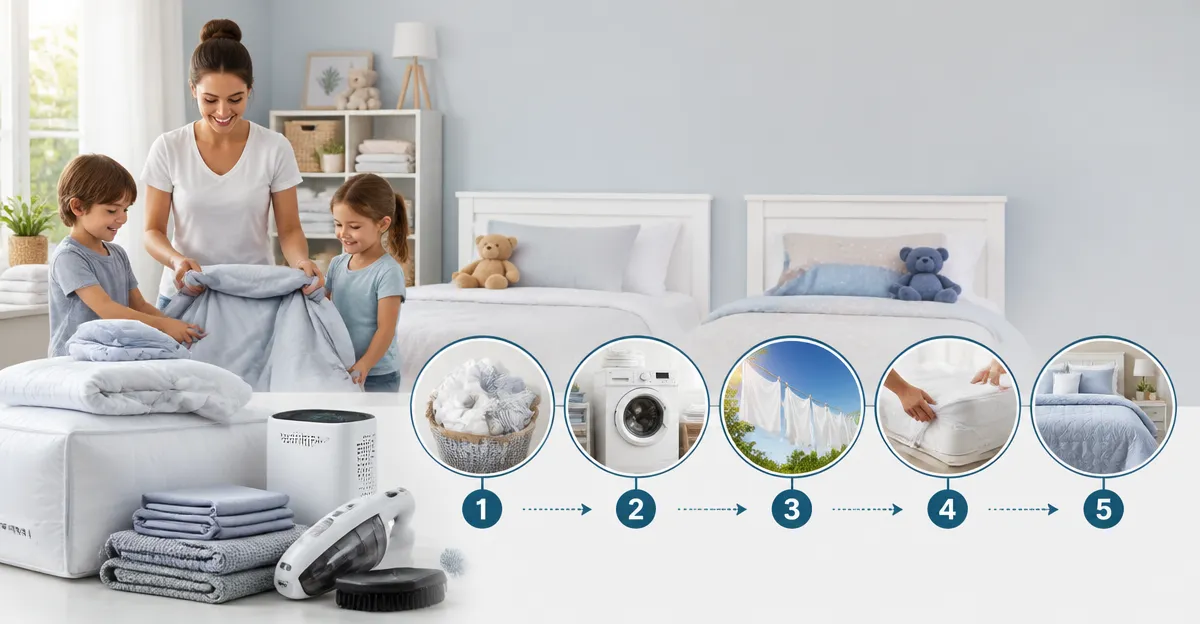
How to Rotate Bedding for Families with Multiple Allergic Kids: Practical Step-by-Step Schedule to Reduce Dust Mites and Allergy Flare-Ups
Introduction
Allergic children often experience flare‑ups triggered by dust mites, pet dander, and pollen that accumulate in bedding. This guide explains a systematic approach to rotating and maintaining bedding so that allergen exposure is minimized. Readers will learn how to create a weekly rotation schedule, how to treat fabrics with targeted products, and how to protect the mattress from hidden allergens. By following these steps, families can create a healthier sleep environment without excessive expense.
What You’ll Need
- Clorox PURE Allergen Neutralizer Spray – $5.92
- Utopia Bedding Mattress Protector – price not listed
- Two sets of pillowcases and sheets per child (preferably cotton)
- Vacuum cleaner with HEPA filter
- Laundry detergent free of added fragrances
- Timer or calendar for scheduling
Step 1: Gather and Inspect Bedding
The first step is to collect all bedding items that will be part of the rotation, including sheets, pillowcases, duvet covers, and mattress encasements. Inspect each item for tears, stains, or wear; damaged fabrics can harbor more allergens than intact ones. Separate items into two groups: those that will be used this week and those that will be laundered. This visual separation simplifies the upcoming rotation and ensures that no piece is overlooked.
Step 2: Pre‑Treat Fabrics with an Allergen Neutralizer
Before laundering, lightly mist each fabric with Clorox PURE Allergen Neutralizer Spray. The spray utilizes Aller‑Fresh Technology, a plant‑based active ingredient that permanently neutralizes pollen, dust‑mite matter, and pet dander without bleach or harsh chemicals. By applying the spray, allergens are rendered inactive, reducing the load that the washing machine must handle. Allow the spray to dry for five minutes before placing items in the wash.
Step 3: Wash with Allergen‑Safe Detergent
Use a fragrance‑free detergent to avoid re‑introducing the 82 common fragrance allergens that can irritate sensitive children. Set the machine to the hottest temperature safe for the fabric, typically 140°F for cotton, to kill any remaining dust‑mite eggs. Add an extra rinse cycle to ensure all detergent residues are removed, as residues can act as irritants for eczema‑prone skin. Dry the items on low heat to prevent shrinkage while maintaining fabric integrity.
Step 4: Protect the Mattress with a Waterproof Encasement
After the bedding is clean and dry, fit the Utopia Bedding Mattress Protector over the mattress. This 100% polyester encasement offers 360° coverage, sealing the mattress against dust mites, bed bugs, and spills. The zippered closure creates a tight seal that prevents allergens from penetrating the mattress core. Because the material is non‑crinkling, it does not disturb sleep while providing a breathable barrier.
Step 5: Implement a Rotation Schedule
Assign each child a two‑week rotation cycle: Week 1 uses Set A of sheets and pillowcases, Week 2 uses Set B. On the night before a switch, repeat Step 2 to pre‑treat the upcoming set, then launder the set that has just been used. Mark the calendar with color‑coded stickers to avoid confusion, especially in households with three or more children. Consistency is essential; a predictable schedule reduces the likelihood of missed washes.
Step 6: Daily Maintenance to Limit Allergen Build‑Up
Vacuum the bedroom floor and upholstered furniture daily using a HEPA‑rated vacuum; this captures dust‑mite fragments that may settle on bedding. Encourage children to keep shoes at the door to prevent outdoor pollen from entering the sleeping area. Open windows for short periods each morning to allow fresh air circulation, but avoid doing so during high pollen counts. These habits complement the weekly rotation and create a multi‑layered defense.
Tips & Pro Tips
- Replace pillowcases every three days for children with severe asthma; the extra frequency reduces exposure to airborne allergens.
- Store clean, unused bedding in sealed plastic bins with a desiccant packet to prevent moisture‑driven mite growth.
- If a child experiences an acute flare‑up, wash the affected bedding immediately and re‑treat with the neutralizer spray before bedtime.
- Consider using a dehumidifier to keep bedroom humidity below 50%, as dust mites thrive in humid environments.
Troubleshooting
Problem: Persistent sneezing despite following the rotation schedule.
Solution: Verify that the mattress protector is fully sealed; any gap can allow mites to infiltrate. Replace the protector if the zipper shows signs of wear.
Problem: Stubborn stains on sheets after washing.
Solution: Apply a small amount of enzyme‑based stain remover before the wash cycle, then repeat the neutralizer spray step.
Conclusion
By integrating targeted products such as an allergen‑neutralizing spray and a waterproof mattress encasement into a disciplined rotation schedule, families can dramatically reduce dust‑mite exposure for allergic children. The systematic approach outlined in this guide provides clear, actionable steps that protect health while maintaining comfort. Implement the schedule today and observe a measurable decline in allergy symptoms over the coming weeks.
Products Mentioned in This Guide
Clorox PURE Allergen Neutralizer Spray
Price: $5.92
Key Features: Neutralizes pet dander, dust‑mite matter, and pollen; allergen‑free fragrance; plant‑based Aller‑Fresh Technology.
Utopia Bedding Mattress Protector
Price: Not listed
Key Features: 360° waterproof coverage; zippered closure; non‑crinkling polyester fabric; machine washable.
All About Allergies
Price: $15.99
Rating: 4.7/5.0 (181 reviews)
Key Features: Comprehensive guide to asthma, food allergies, hay fever, and management strategies.
Frequently Asked Questions
How often should families rotate bedding for children with allergies?
Rotate each child’s sheets and pillowcases weekly to prevent dust‑mite buildup.
What fabric is best for allergy‑friendly bedding?
100% cotton or bamboo fabrics are breathable and less likely to trap allergens.
How can I treat sheets to kill dust mites without harsh chemicals?
Spray Clorox PURE Allergen Neutralizer after washing and let it air‑dry before reuse.
Does a mattress protector reduce allergen exposure?
Yes, a waterproof, hypoallergenic mattress protector blocks dust mites and pet dander from the mattress.
Is a HEPA‑filter vacuum enough to keep the bedroom allergen‑free?
A HEPA vacuum removes surface allergens, but regular laundering of bedding is still essential.